Resale Outlook 2026
Resale Outlook 2026: why second-hand sales stall between strangers, what the marketplaces people trust do about it, and how Cüte builds trust into every sale, in the editorial family's layouts.
Deck
34 slides. Arrow keys, Space and a swipe move through it and every slide has its own URL. F is full screen, which is present mode, with the speaker notes on N; Ctrl+G lays the grid over the slide.
2026
Resale Outlook
How resale earns trust, one sale at a time
Resale Outlook 2026
First editionAlmost everyone in Brazil and Europe has bought or sold something second-hand. Most of them did it through a classified ad, and most of them can tell a story about the sale that went wrong.
That story is why people keep things they no longer use, and why a sale between strangers so often stops at the first message.
Resale Outlook looks at what holds a sale back, what the marketplaces people trust have done about it, and what Cüte builds into every sale so that a stranger can be trusted the first time.
It is written for the partners, investors and sellers we are building it with.
Partners and investorsResale Outlook 202602
- AThe marketWho buys, who sells, and how much
- BThe trust gapWhere a sale between strangers stops
- CThe studyWhat we looked at, and how
- DWhat worksWhat the marketplaces people trust do
- ECüte's answerTrust built into every sale
- FWhat comes nextAfter the ad, the sale
Partners and investorsResale Outlook 202603
A
The market
Partners and investorsResale Outlook 202604
In 2025, the marketplaces that made a sale safe kept growing while the classifieds stood still.
Resale used to be something people did between two moves, or to clear a cupboard. It has become a habit.
The marketplaces that built trust into the sale are the ones that grew.
Classifieds made it easy to post and left everything after the post to the people trading.
The question for every marketplace now: who carries the risk of the sale?
Vinted traded €10.8B in 2025, up 47% in a year. Second-hand apparel grew 13% worldwide. Seven in ten Brazilians have bought or sold used, and most still did it with cash and a classified ad.
Partners and investorsResale Outlook 202605
The state of trust in resale
Over the last decade, what people expect from buying second-hand has caught up with what they expect from a shop.
Buyers check a seller's reviews before the price. A listing with a real photo and a history of sales sells first.
Payments that wait for delivery have become the norm on the marketplaces people trust.
Classifieds still leave the risk with the people trading: cash at a meetup, a bank transfer to a stranger, a parcel with no tracking.
Every one of those is a sale that never happens.
Partners and investorsResale Outlook 202606


Fashion leads resale, and the photo sells it.
Fashion leads resale: clothes, shoes and bags are what people list first, and what buyers search for most.
They are also where a photo has to do the most work, because nobody can try them on.
So the photo is where a Cüte listing starts. It suggests the title, the brand, the colour and the condition, and the seller only checks it.
A listing that took minutes takes seconds.
Partners and investorsResale Outlook 202607
B
The trust gap
Partners and investorsResale Outlook 202608
People have plenty to sell and plenty they would buy used. What stands between them is a stranger.
This isthetrust gapinresale
Partners and investorsResale Outlook 202609
Wanting to sell vs. actually listing
Would sell itListed it
- Fashion68%14%
- Electronics52%9%
- Kids47%11%
- Home41%6%
- Sport33%4%
Most people have something they would sell second-hand. Few of them list it.
The gap is the effort and the risk of a sale with a stranger, and it is widest where items are worth the most.
Illustrative figures.
Partners and investorsResale Outlook 202610
“The moment people doubt a second-hand sale most is the moment after they pay.”
Without protection, a buyer's first sale with a stranger is their last.
The first sale is where trust is won or lost. A buyer who waits a week for a parcel that never ships does not come back.
Every protected sale is a reason to buy the second time.
So Cüte holds the payment until the buyer confirms the item arrived as described, and pays the seller two days after delivery if they report nothing.
Neither of them has to trust the other. They trust the sale.
Partners and investorsResale Outlook 202611
“People don't just want a bargain. They expect to know who they are buying from, and to get their money back if it goes wrong.”
With every safe sale, people expect the next one to be safe too.
A good price is no longer enough. Buyers check a seller's reviews before the price, and pick the listing they can pay for safely over the cheaper one they can't.
When it is expected, protection stops being an advantage. It becomes the price of entry.
- 70%
- of Brazilians have bought or sold second-hand items.
- 5B+
- instant payments made every month in Brazil, the rail Cüte pays on.
Partners and investorsResale Outlook 202612
C
The study
Partners and investorsResale Outlook 202613
Which second-hand experiences stand out? What does it take for a buyer to trust a stranger? And where does resale go next, once paying and shipping are solved?
This report compares the ways people buy and sell second-hand today: classified ads, the marketplaces that grew out of them, and the apps built for resale from the start.
We looked at each the way a first-time buyer would, from the first message to the item at the door.
Over its pages we score how each handles the moments a sale is lost: trusting a stranger, paying, meeting up and shipping.
And we show what Cüte does at each of them, in the product today.
Partners and investorsResale Outlook 202614
We looked at three kinds of place to buy and sell used
Classifieds
Where resale started
The ad sites people grew up on: post a photo and a price, then arrange the rest by message. Free to post, and the risk stays with the people trading.
Marketplaces
New and used together
Generalist marketplaces where second-hand sits beside new stock. Payments are protected, but listing used items is an afterthought.
Resale apps
Built for second-hand
Apps made for selling what you own: listing from a photo, payments held until delivery, shipping in the app and reviews from real sales.
Partners and investorsResale Outlook 202615
and many more
The selection
We looked at the marketplaces people in Brazil and Europe use to buy and sell second-hand: the classifieds, the generalist marketplaces and the apps built for resale.
We picked the ones people name first and the ones growing fastest, and used each as a first-time buyer and seller would.
Partners and investorsResale Outlook 202616
Methodology
Our review, the way a first-time buyer and seller would go through it
From August to October 2026 we listed, bought and shipped on every marketplace in the selection, as a first-time user in each market.
Each review follows the same 40 questions across the seven moments of a sale, scored from 0 to 10.
- 12
- marketplaces reviewed
- 2
- markets, Brazil and the EU
- 7
- moments a sale can be lost
- 40
- questions in every review
Partners and investorsResale Outlook 202617
Trust score
We score each marketplace on the seven moments a second-hand sale can be lost, from the listing to the payout, with a 40-question review of each.
- 1. Listing an item
- 2. Knowing who sells
- 3. Paying safely
- 4. Meeting up
- 5. Shipping and tracking
- 6. Help when it goes wrong
- 7. Getting paid
Partners and investorsResale Outlook 202618
D

Trust is the baseline
Partners and investorsResale Outlook 202619
Key learnings
Pay through the platform
Every marketplace that grew put the payment between the buyer and the seller, and released it only once the item arrived.
The classifieds that didn't are where scams still happen.
Listing in seconds
Listing is where most sellers give up. A photo that fills in the title, the category and the condition takes it from minutes to seconds.
Reviews that mean it
Reviews from real sales count for more than a profile photo. Buyers read them before the price.
Shipping built in
A label and tracking in the app turn shipping from a chore into one more step of the sale.
Partners and investorsResale Outlook 202620
Do it like Vinted
→Vinted made the buyer pay for protection and left selling free. Sellers list more because it costs them nothing, and buyers pay a small fee they can see, for a sale they can trust.
Do it like Duolingo
→Duolingo turns a habit into a streak. Every lesson rewards the next one. A seller's first sale on Cüte should feel the same: a small win that makes the second one easy.
Do it like Airbnb
→Airbnb taught strangers to sleep in each other's homes with two things: reviews on both sides and payments held until the stay begins.
Partners and investorsResale Outlook 202621
Easy mode
- Greet a first-time seller by name and list their first item with them.
- Suggest the title, the price and the category from the photo.
- Explain buyer protection before the first payment, in one line.
- Send the label as soon as an item sells.
Pro mode
- Boosts that put a seller's best listings first.
- A shop page with the seller's reviews and their bundles.
- Offers and counter-offers in the chat.
- Payouts to the seller's own account, on their schedule.
E
Cüte's answer
Partners and investorsResale Outlook 202623
What holds a second-hand sale back is never the price. It is a moment where one side has to trust the other. Each moment has its answer, and each answer is a strategy.
- Listing feels like work→Start from a photo
- Strangers feel risky→Reviews from real sales
- Paying first is a gamble→Hold the money until it arrives
- Meetups mean cash→Pay in the app, on record
- Shipping is a chore→Labels and tracking built in
- Selling has a cost→Free for sellers, always
Partners and investorsResale Outlook 202624
Hold the money until it arrives
A buyer who pays a stranger first is taking a risk most people won't take. So Cüte takes it for them.
The payment waits in the app until the item arrives as described. The seller is paid once the buyer confirms, or two days after delivery if nothing is reported.
- Mindset
- Wary of strangers
- Winning
- Pays without a second thought
- Losing
- Asks for cash
Partners and investorsResale Outlook 202625
Protected payments
Paid only when it arrives
A sale between strangers works when neither of them has to trust the other first. Cüte holds the payment, so both can trust the sale.
- The buyer pays in the app, by PIX, card or wallet.
- The money waits until the item arrives as described.
- The seller is paid two days after delivery if nothing is reported.
Partners and investorsResale Outlook 202626
1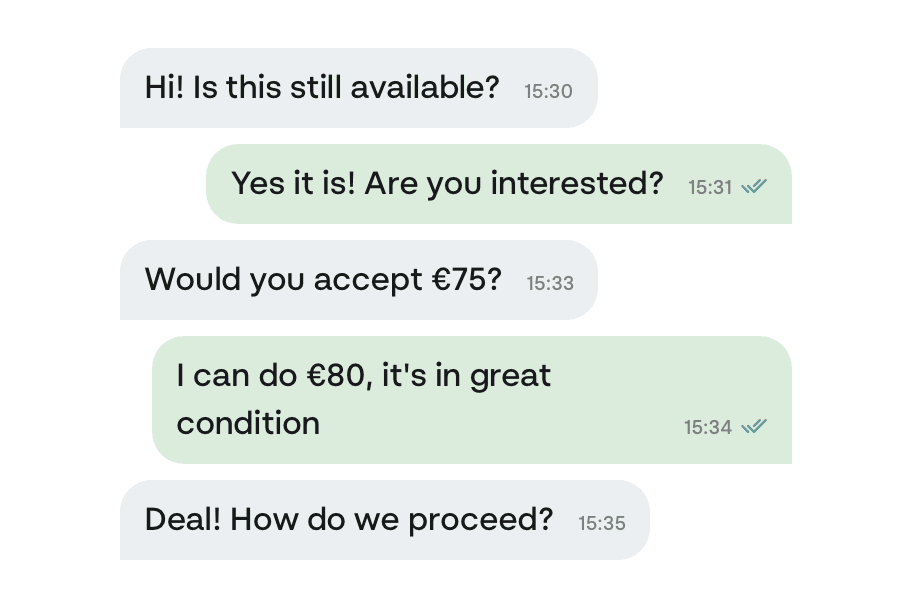
2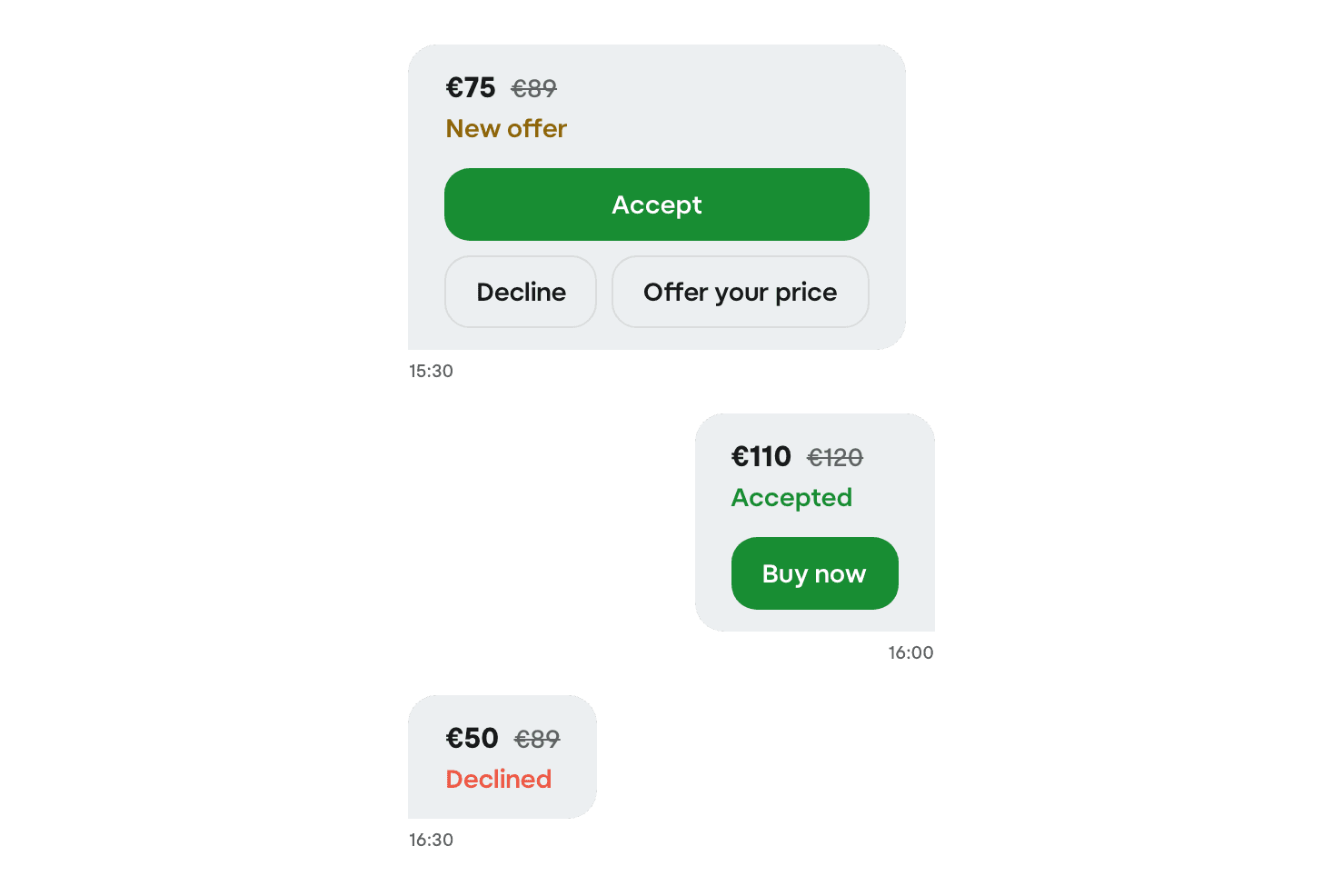
Offers
Agree the price in the chat
Haggling happens where the sale does, so the agreed price is the one the buyer pays.
- 1The buyer asks and offers a price in the chat.
- 2The seller accepts, declines or offers their own.
Partners and investorsResale Outlook 202627
Cüte, screen by screen
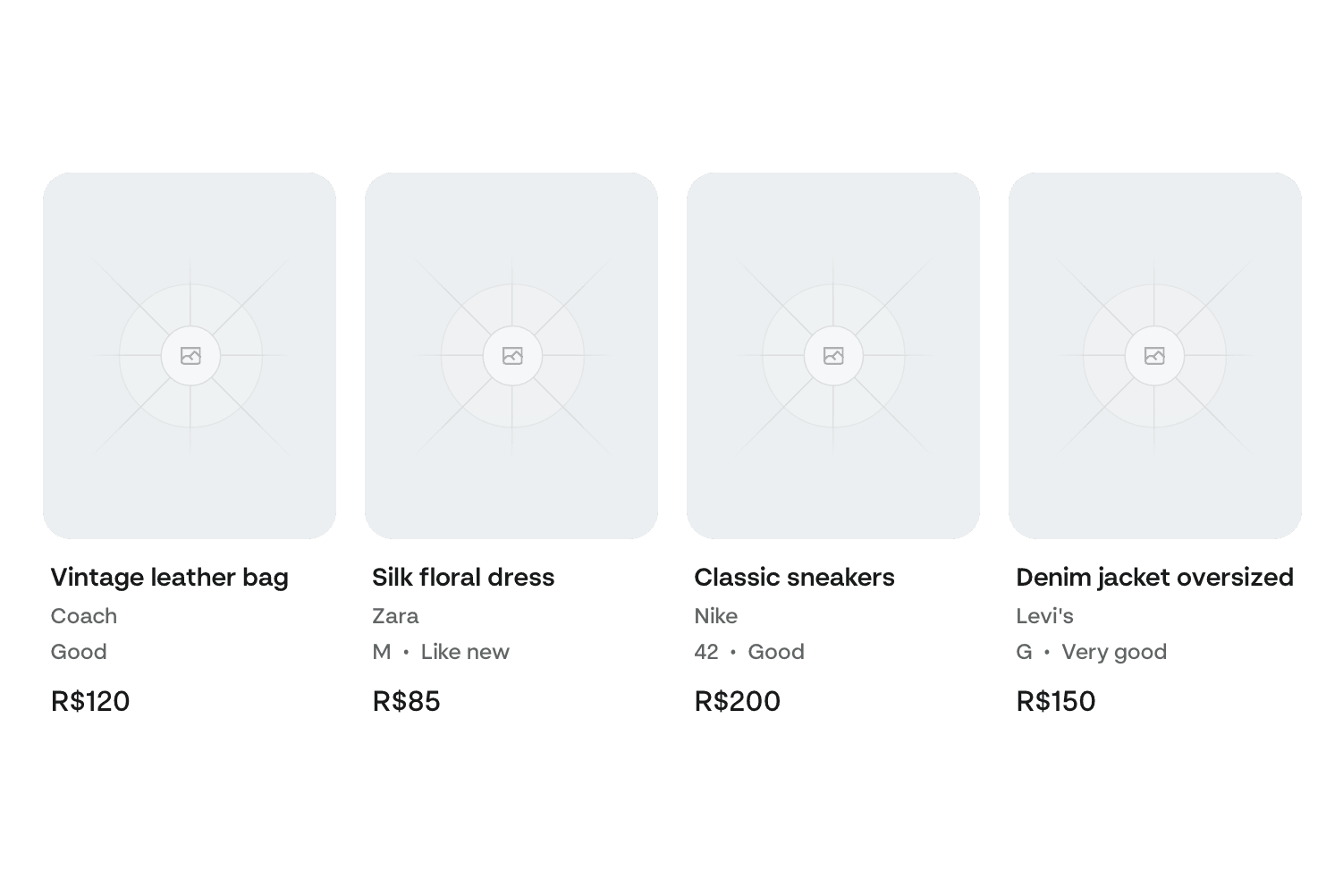
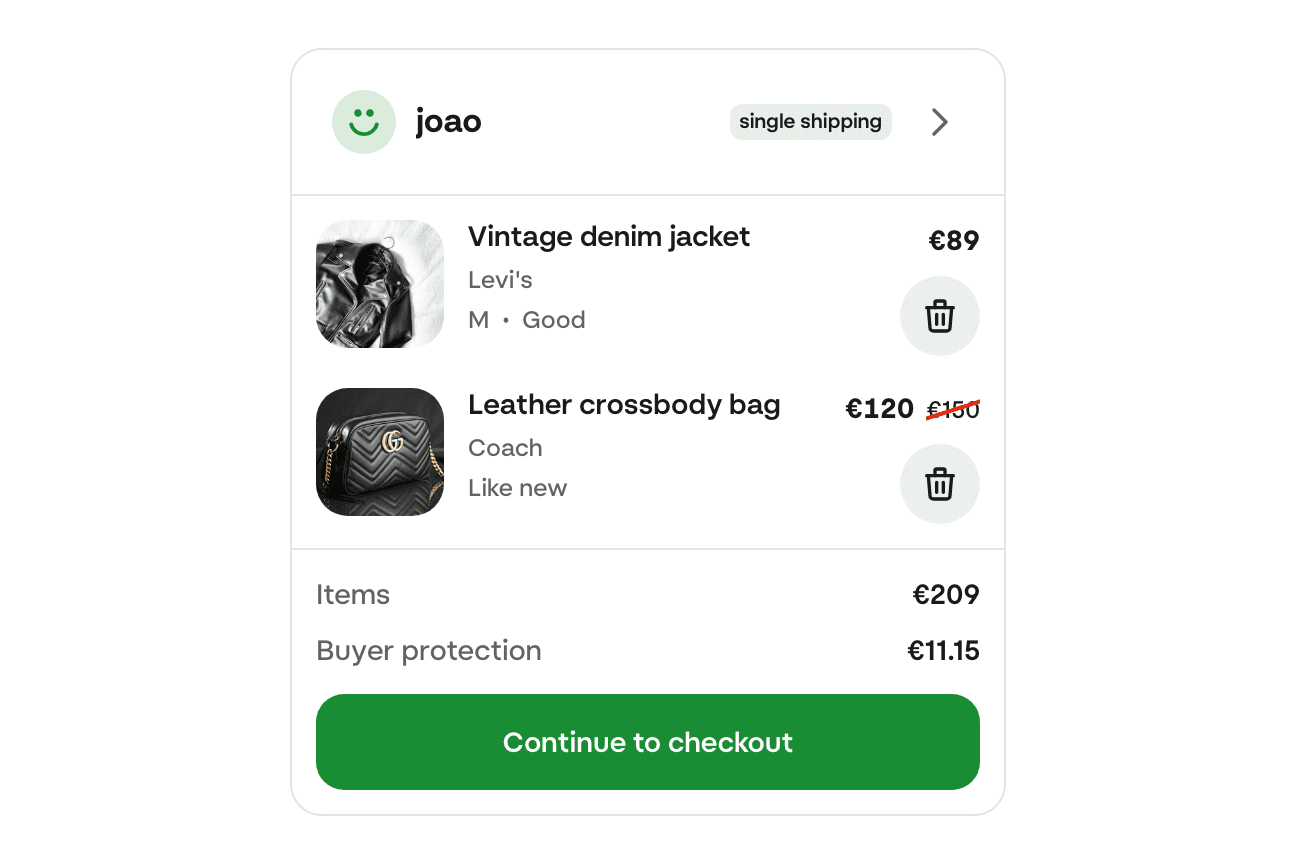
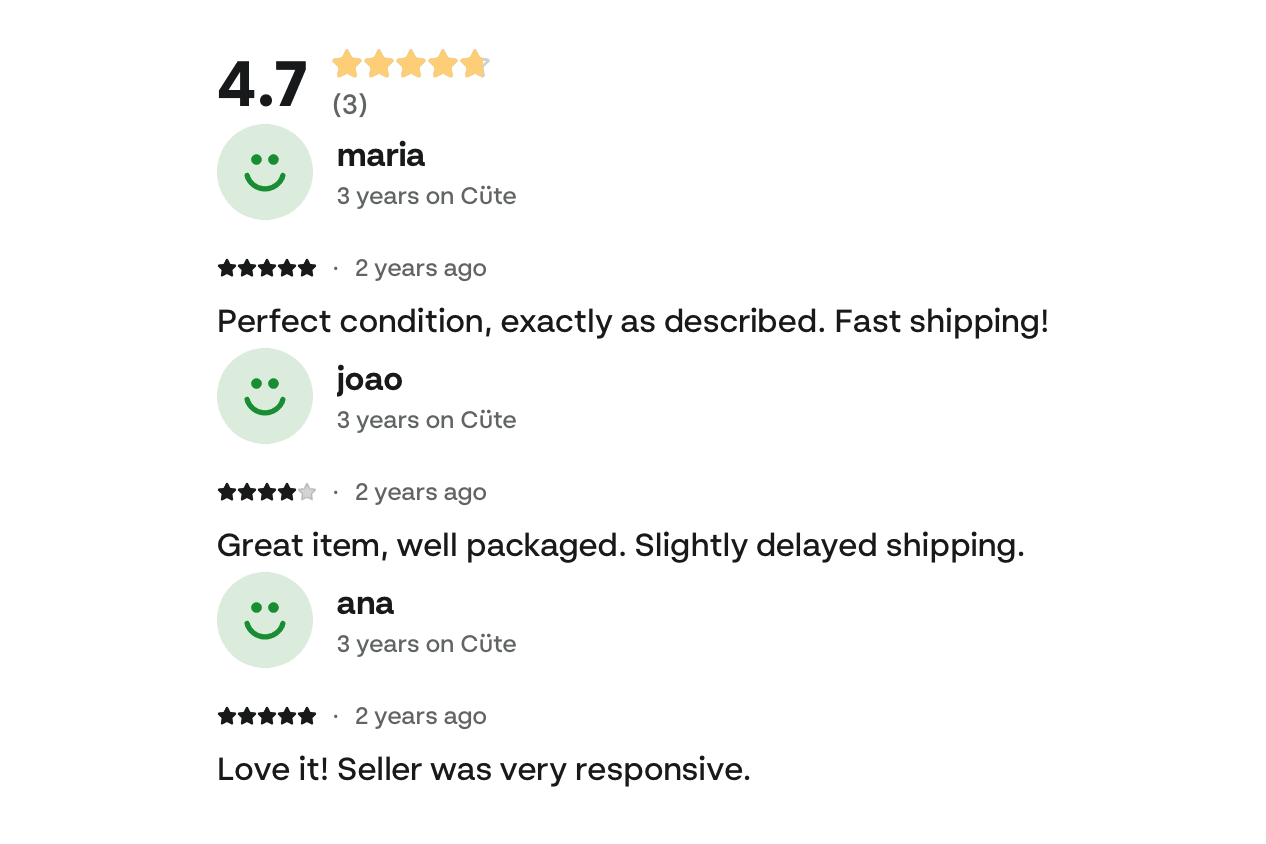
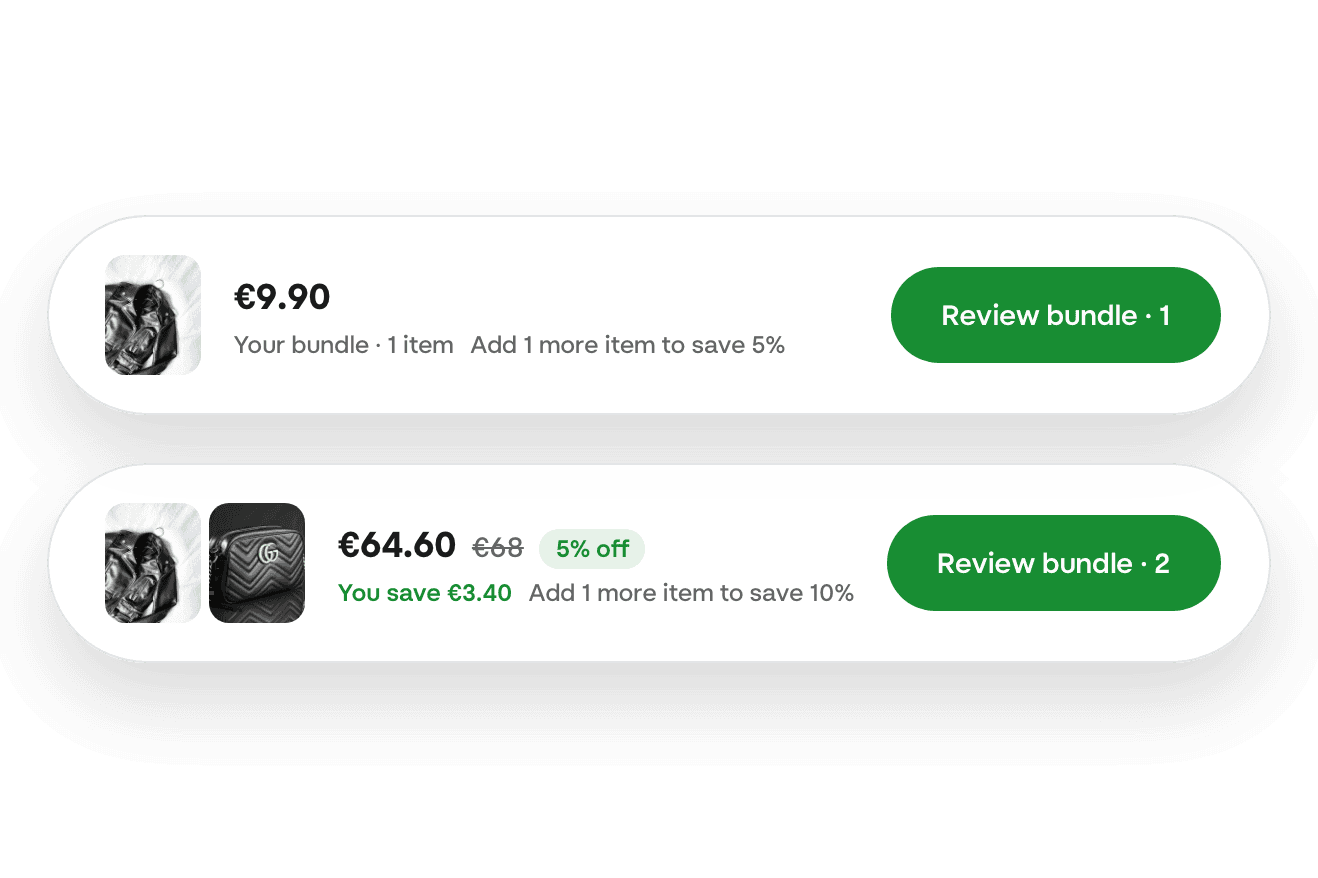
Every screen here is in the product today: listing, offers in the chat, a cart per seller with buyer protection, reviews from real sales and bundles.
The appendix lists the features we scored and which of them count as the baseline.
Partners and investorsResale Outlook 202628
 In the app today
Closing the gap: resale that feels like a shop
Classifieds made posting easy and left the rest to the people trading: the haggling, the payment, the meetup and the parcel.
The marketplaces that grew took that work on themselves.
On Cüte the sale happens in the app: the offer, the payment held until delivery, the label and the tracking.
A buyer trusts the sale, not the stranger.
Partners and investorsResale Outlook 202629
How Cüte scores
Out of 10, from our own review of the app.
Total score
8.2
- 9.5Listing
- 8.0Trust
- 9.0Paying
- 7.5Meetups
- 8.5Shipping
- 7.0Help
- 8.0Payouts
Partners and investorsResale Outlook 202630
Trust features
Total score
8.2
- Listing from a photo9.5
- Reviews from real sales8.0
- Payments held until delivery9.0
- Meetups paid in the app7.5
- Labels and tracking8.5
- Help from a person7.0
- Payouts to the seller8.0
Partners and investorsResale Outlook 202631
F
What comes next
Partners and investorsResale Outlook 202632
The next wave in resale will not be about the ad. It will be about everything that happens after it.
For a decade, resale has meant a classified ad: a photo, a price and a phone number. What happened after the ad was nobody's job.
That is where most second-hand sales are lost: in the message that goes unanswered, the payment nobody trusts and the parcel nobody tracks.
Cüte starts where the ad ends. Every sale is paid, protected and on record, so a stranger can be trusted the first time.
This report shows how, and what it changes for the people buying and selling.
“After the ad is the sale”
Partners and investorsResale Outlook 202633
Thanks to
- The sellers who listed first
- The buyers who trusted them
- Our partners at Stripe
- Our partners at Pagar.me
- Sendcloud
- Melhor Envio
- Everyone who sent feedback
- The Cüte team
Partners and investorsResale Outlook 202634